Key takeaways
- Old dough contributes aroma, softness and a more resilient crumb.
- Temperature, humidity and fermentation condition must be monitored together.
- Standardised production protects traditional character while improving batch consistency.
What is old-dough fermentation?
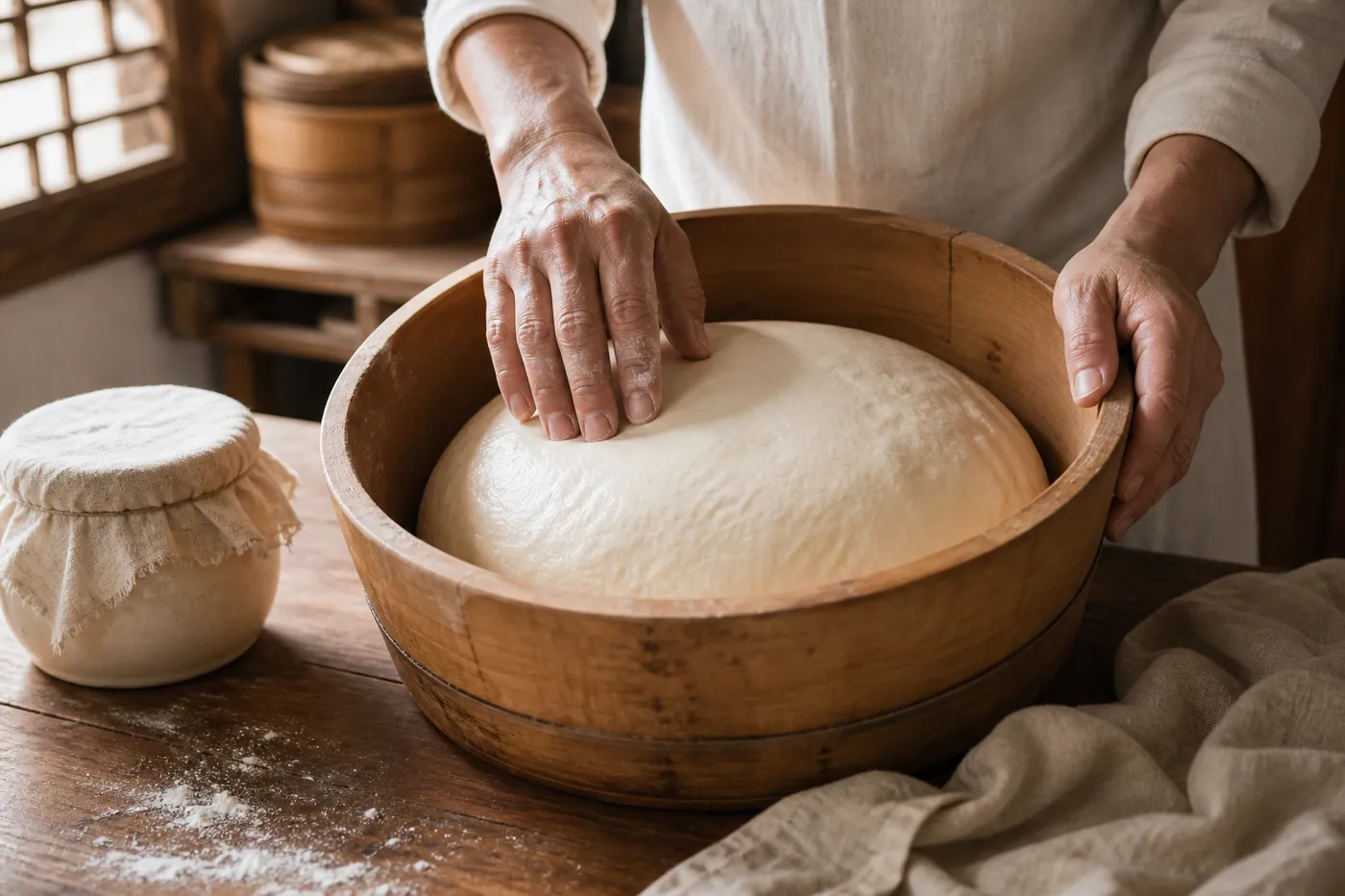
Old dough is a portion of fermented dough retained to seed the next batch. Before commercial instant yeast became common, bao makers relied on this living starter. With careful maintenance, it develops a balanced fermentation profile that contributes aroma and texture beyond simple leavening.
How does old dough change steamed bao?
Fermentation creates flavour compounds and changes the dough structure. When managed well, the finished bao is soft without feeling weak, has a gentle fermented aroma and keeps a satisfying texture after steaming. The aim is balance—not sourness or an overpowering yeast smell.
Why do temperature and time matter?
Fermentation speed changes with room temperature, dough temperature and humidity. Experienced production teams read the dough's volume, surface, aroma and elasticity instead of relying on the clock alone. These checks help prevent under-fermentation, collapse or a coarse crumb.
Can traditional craft work in a food factory?
Yes. Foo Chow Food Industries Sdn Bhd combines old-dough knowledge with documented controls, cold storage and repeatable production steps. This gives restaurants, cafés, kopitiam and wholesale customers a bao with traditional character and dependable performance.
FAQ
Frequently asked questions
Does old-dough bao taste sour?
Properly balanced old-dough bao should have a gentle fermented aroma, not a strong sour taste. Sourness usually signals that time, temperature or starter condition needs adjustment.
Is old-dough bao suitable for frozen foodservice supply?
Yes. With controlled production, freezing and preparation instructions, old-dough bao can deliver consistent results for restaurants, cafés and wholesale buyers.
Where is Foo Chow's bao produced?
Foo Chow Food Industries Sdn Bhd produces frozen bao and dim sum in Kluang, Johor, Malaysia, with cold-chain supply across West Malaysia.